Founder Case Study
Built a sports app from scratch. Then learned when to pivot.
Recess Sports → ClubConnect · Founding Designer · React Native + Firebase · 2024–Present
The Product
Every volleyball event in Chicago. One app.
Recess V2 became a full two-sided platform — event discovery and creation, facility booking, player recruitment, and structured leagues. Here's what it looked like at its most built-out.
Event Discovery
Date-based calendar aggregating open gyms, tournaments, and leagues citywide. Every Chicago volleyball event, one place.
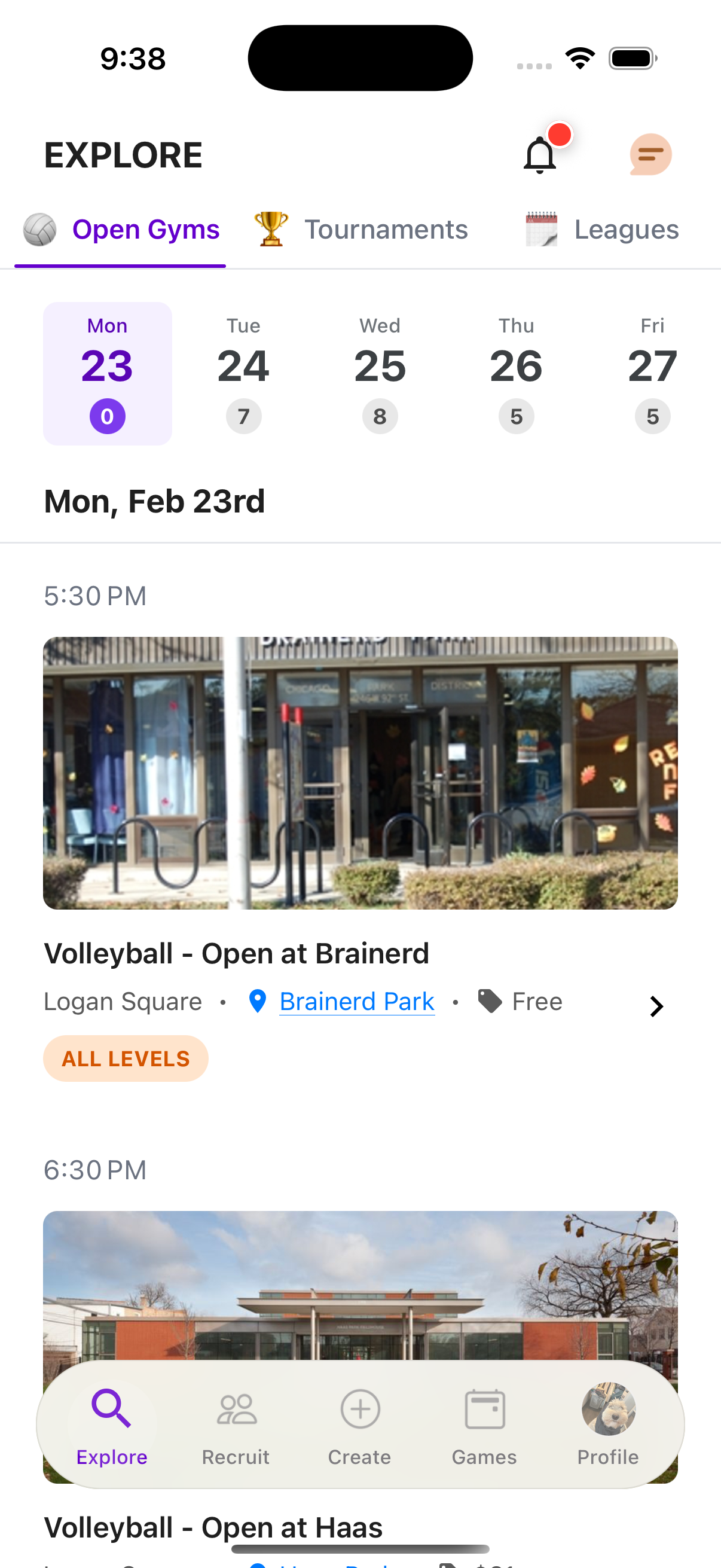
Home
Event feed · skill-matched recommendations · one tap to join
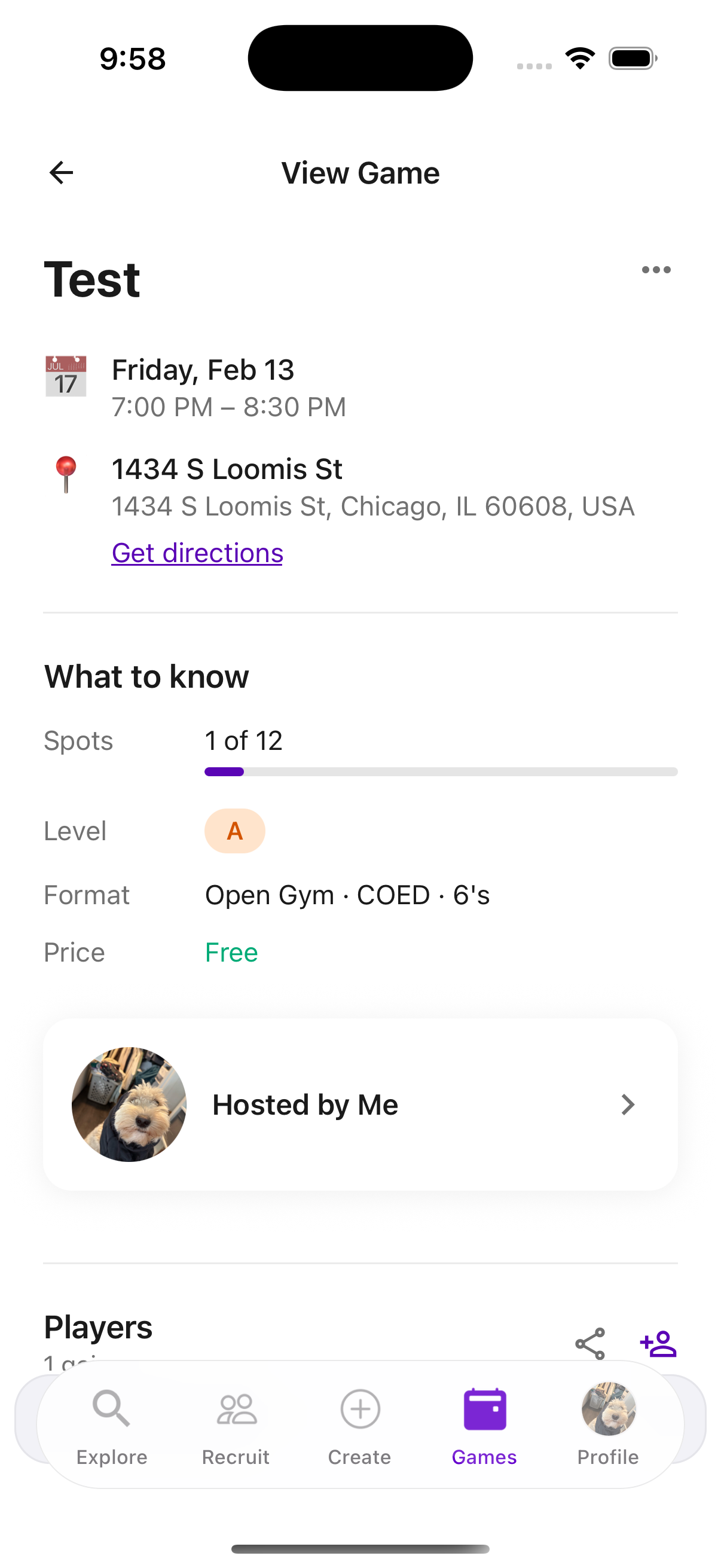
Event Detail
Live player list · host notes · RSVP tracking
Player Matching
Searchable player directory filterable by position and skill level. Find a sub in 30 seconds instead of spamming a GroupMe.
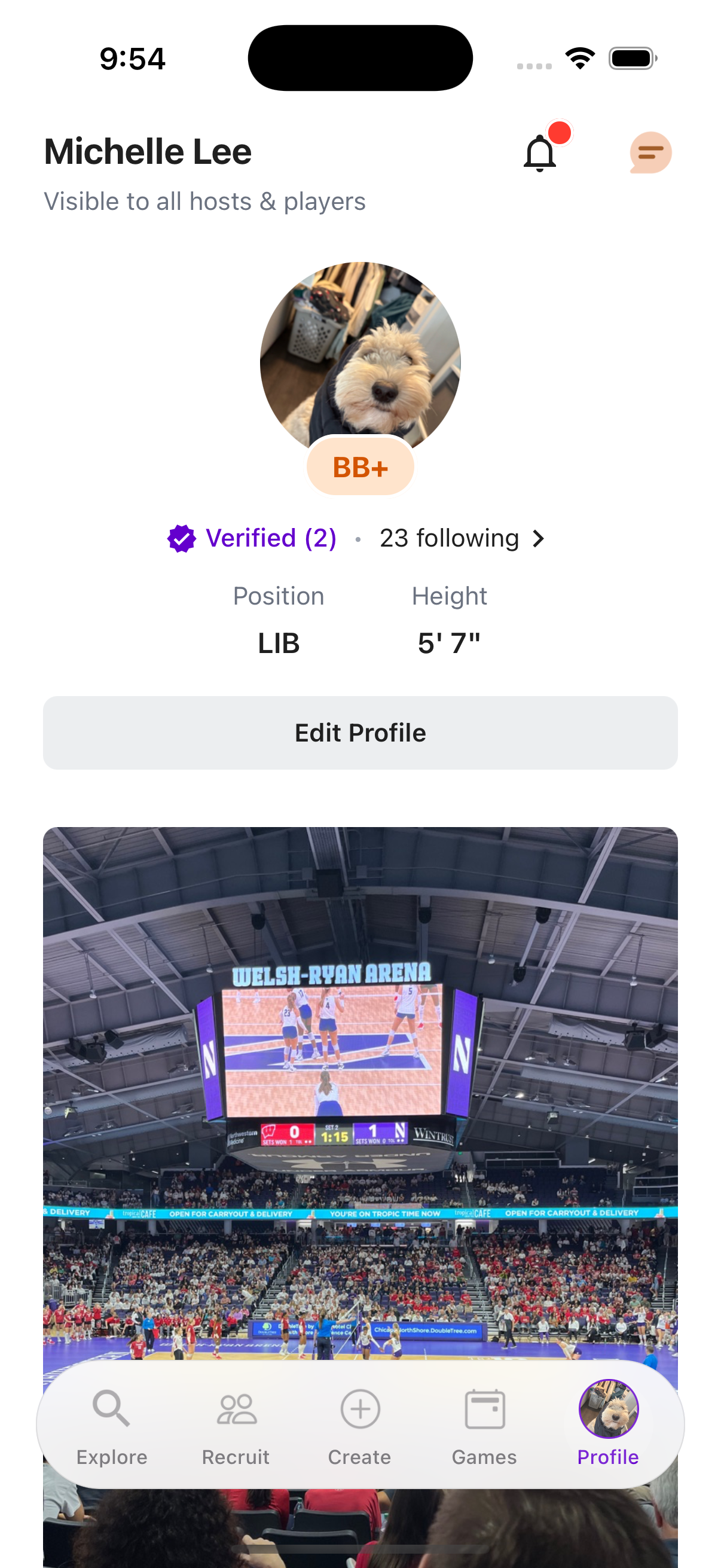
Profile
Stats · skill rating · event history · social proof
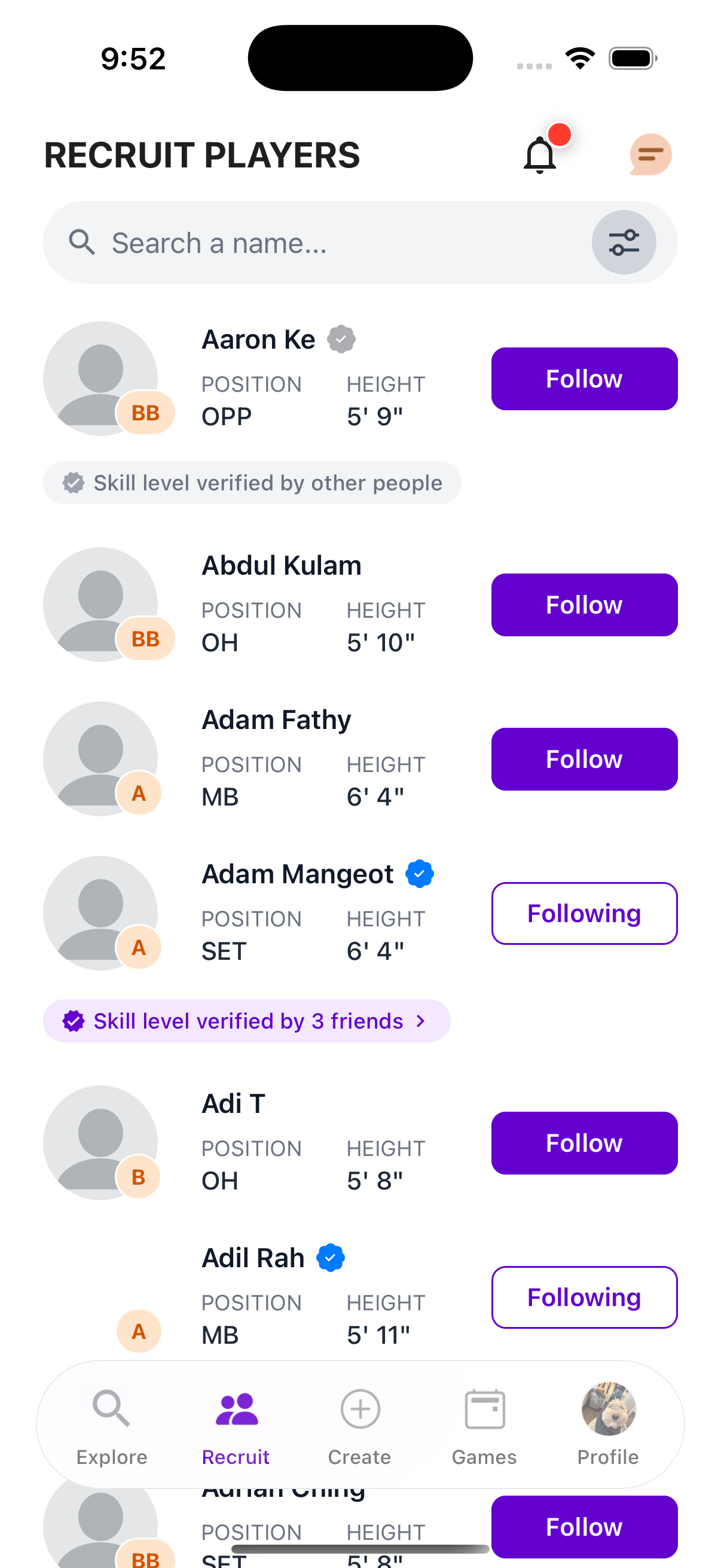
Player Directory
Browse by skill level · position · mutual connections
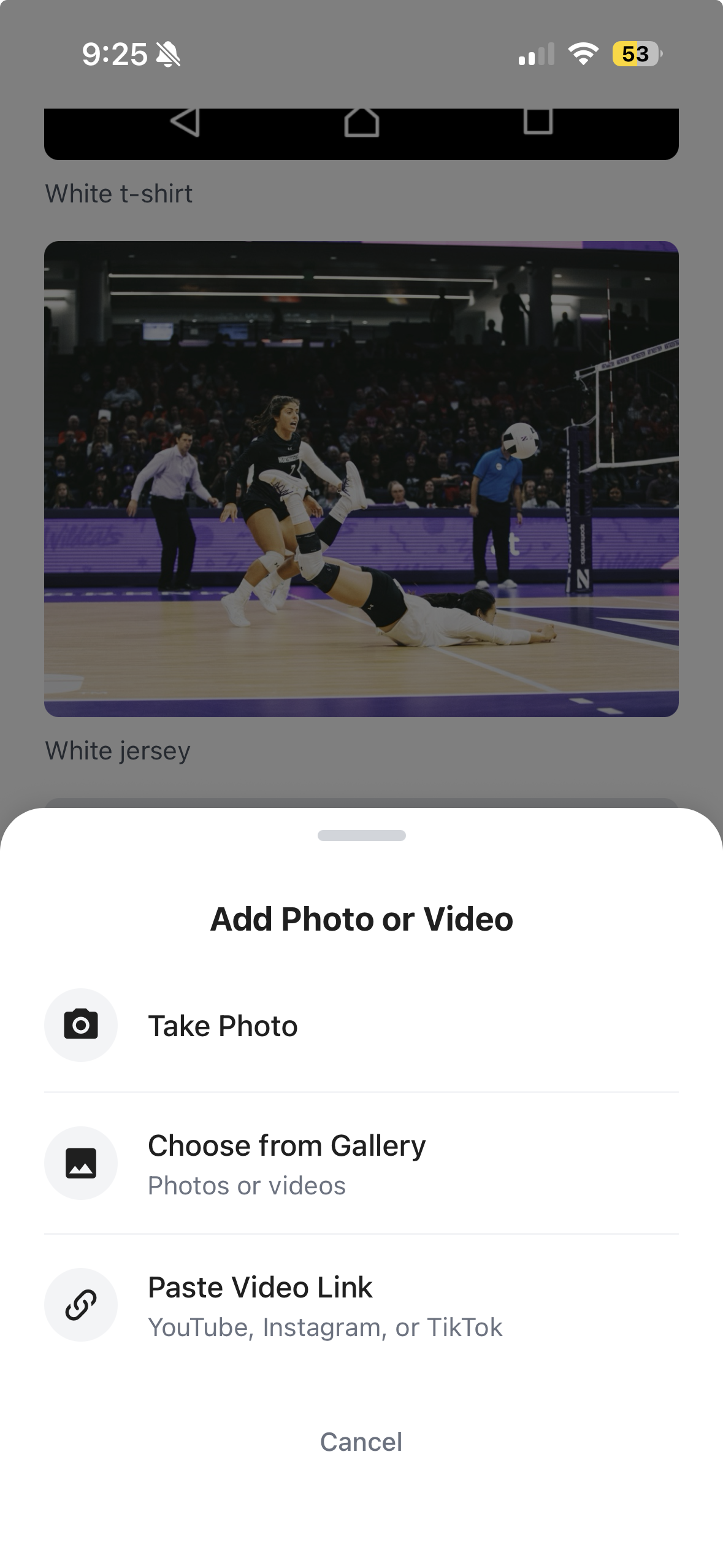
Upload
Add your highlight clip · profile photo · court proof
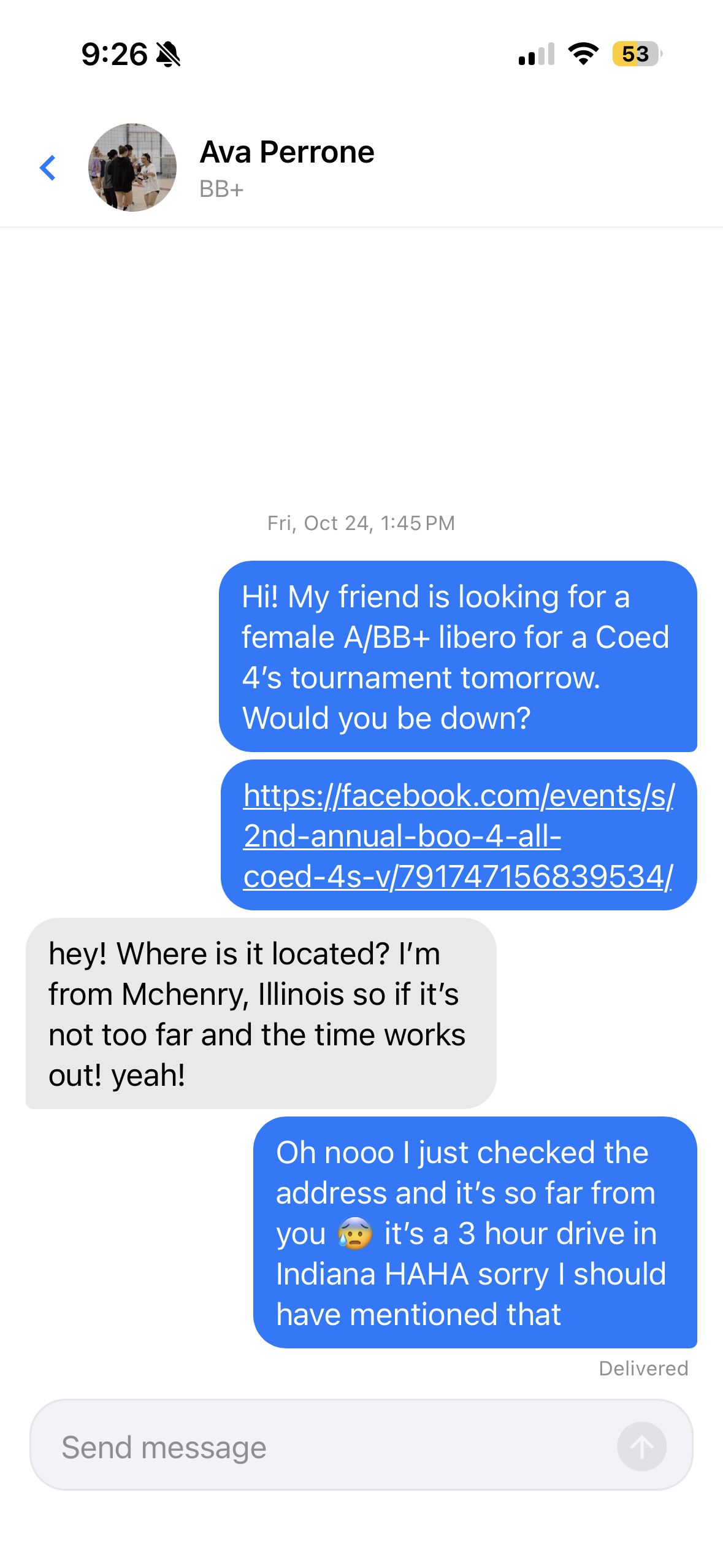
Chat
Direct messages · event threads · coordinate in real-time
UGC Flywheel
Any user can create and host events. Public events auto-populate the main feed — supply grows as the community grows.
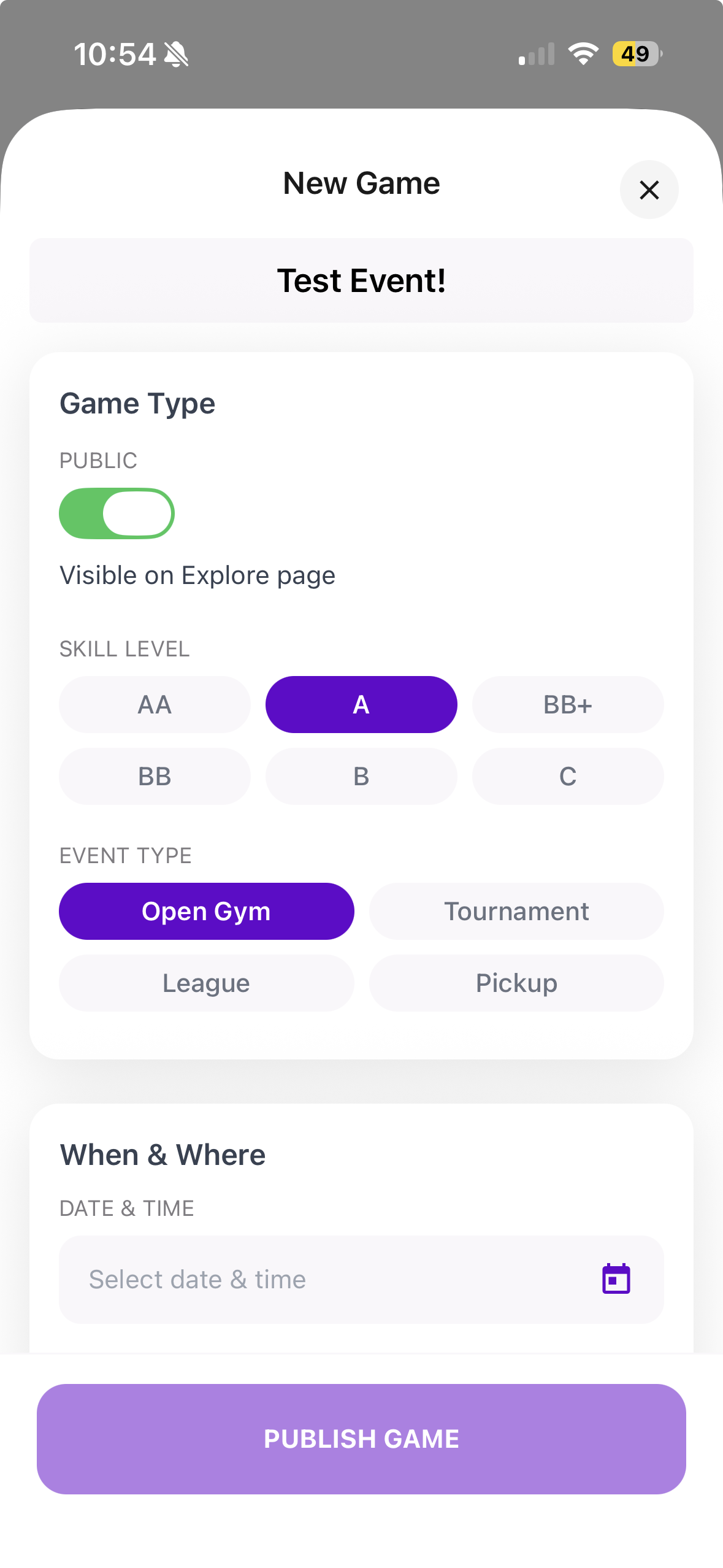
Create Event
Set date, location, skill level, format — live in 60 seconds
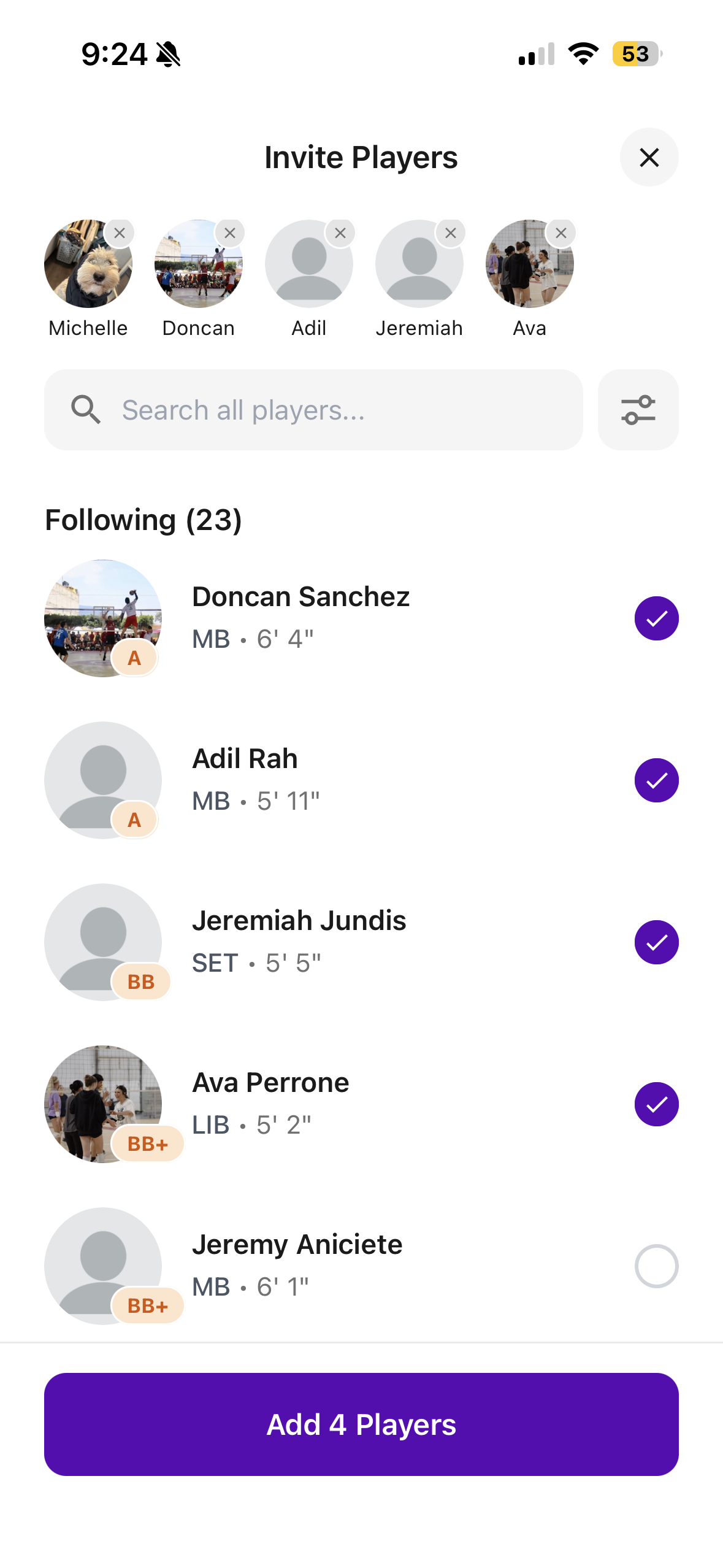
Invite Players
Quick invite · search by name · see who's available
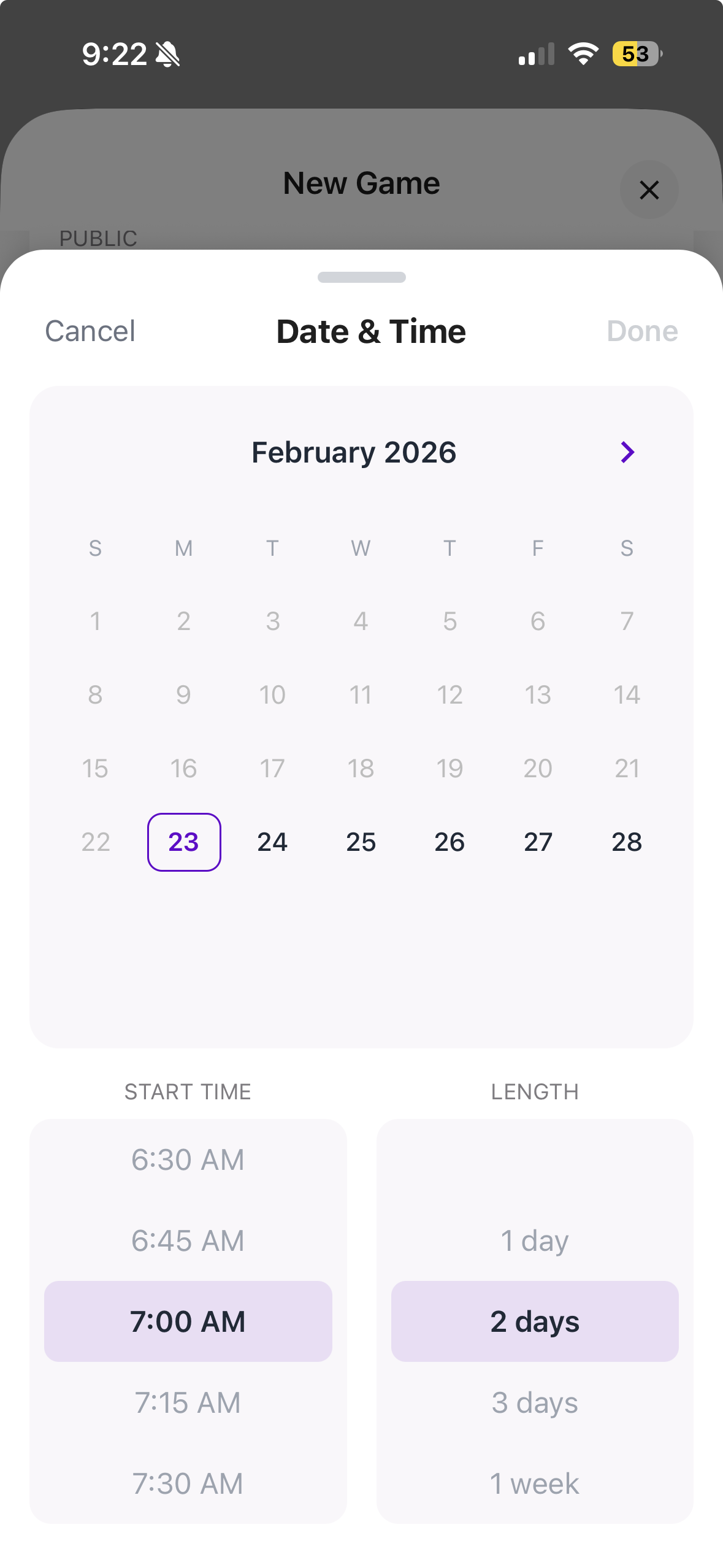
Date Picker
Pick a date and time · recurring or one-off · instant availability
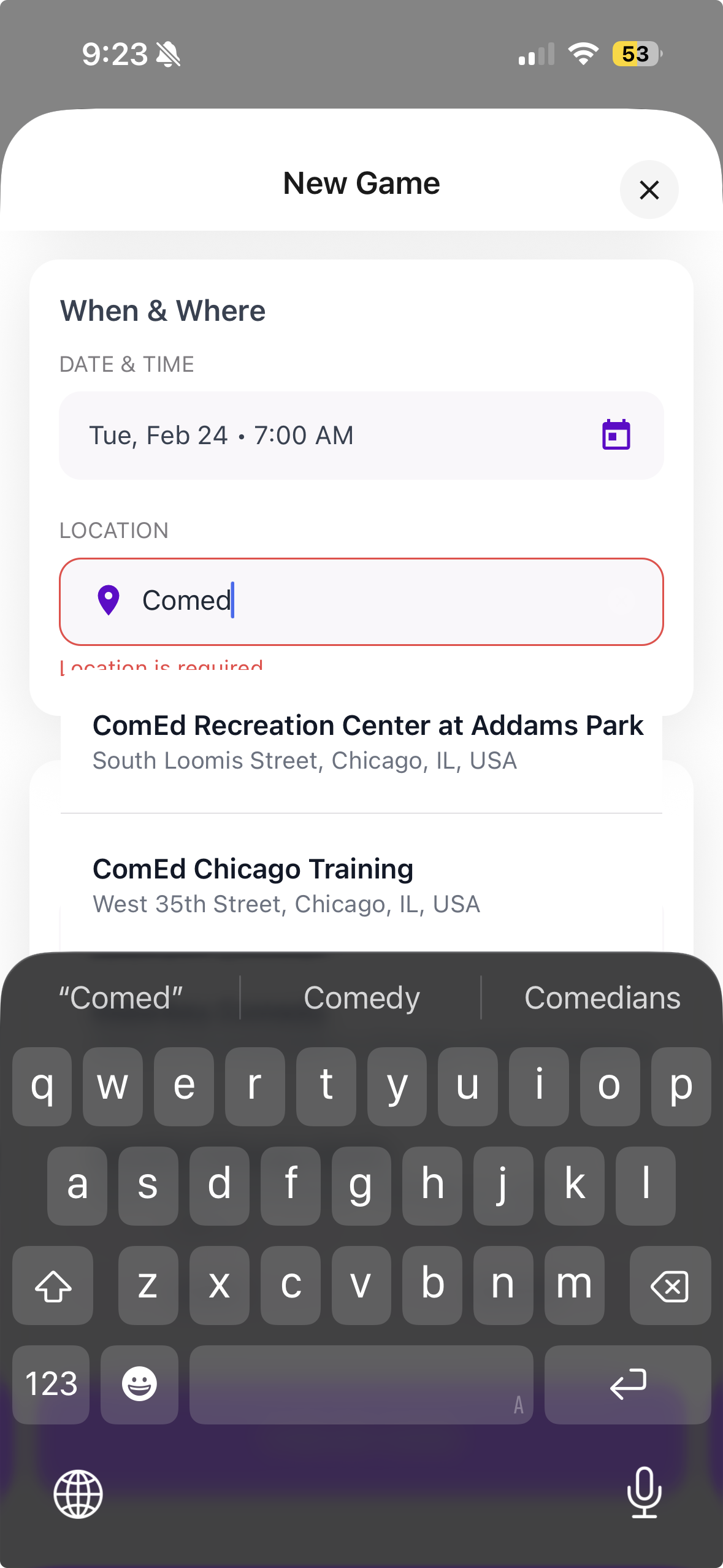
Location
Pin a court · search by neighborhood · save frequent spots
Design Language
A system built for the pickup game mentality.
Casual but credible. The design had to feel as spontaneous as the sport — low friction, high trust, instantly readable skill signals.
Brand Evolution
v1 · 2024
v2 · rebrand
.png)

v3 · final
Color System
Brand Purple
#6400CD
Skill Orange
#DD5F0C
Confirmed
#147D64
Action
#0078FF
Lavender Tint
#EDDDFF
Skill Level System
Community-rated, not self-reported. Prevents sandbaggers, raises game quality.
Positions
Event Card
Comed Rec Center Open Gym
Fri Oct 25 · 6:30–8:30 PM · CoEd 6's
Recruit Blast
Post a position opening → get matched with players whose skill level and position are verified by their community.
Eric Malesich
OH · 3 friends verified
Livia Levin
OH · 1 friend verified
Onboarding
From zero to playing in 3 steps.
Post-launch data showed a 40%+ drop-off in the original onboarding. Usability sessions confirmed it felt like homework. We rebuilt it around a single principle: only ask what the app needs right now to give you value.

Step 00 · Splash
First impression in one second
A branded moment before the app begins — logo, tagline, floating particles. Sets the tone: casual sport energy, not corporate SaaS.
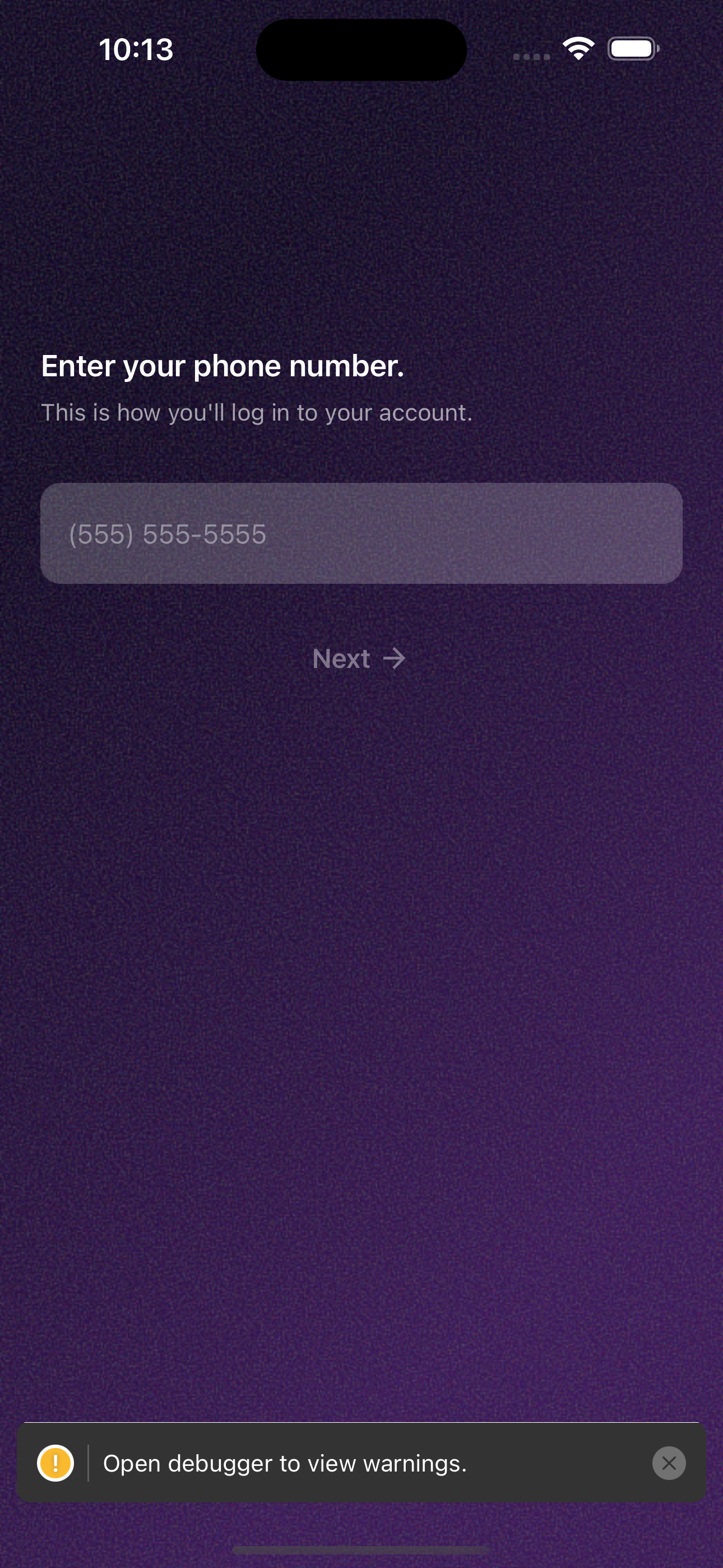
Step 01 · Phone Entry
No account creation tax
Phone number only. No email, no password, no profile photo. The only question at the gate is: who are you? One tap, one OTP, done.
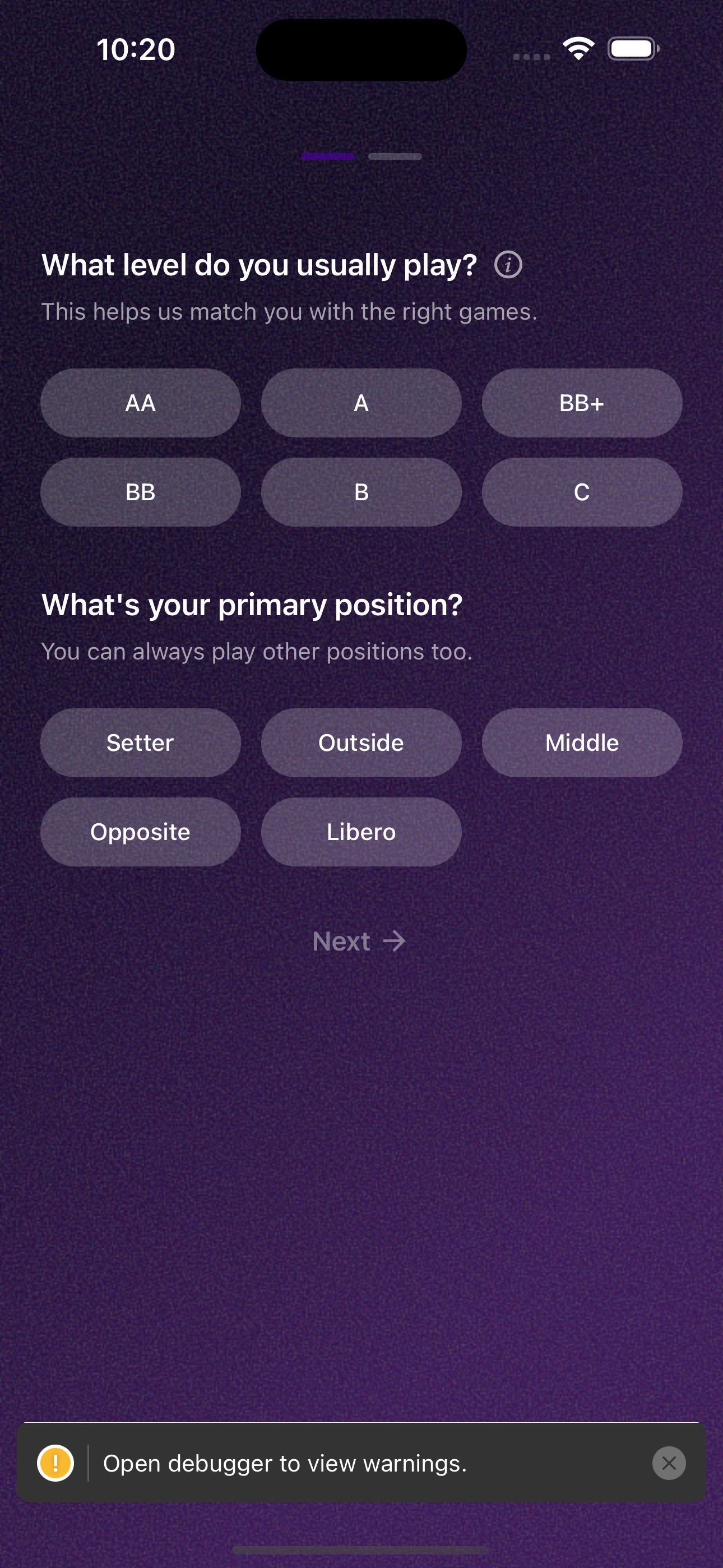
Step 02 · Skill Level
Two questions that unlock everything
What level do you play? What position? That's it. These two answers feed the matching algorithm — every event recommendation from here is calibrated to you.
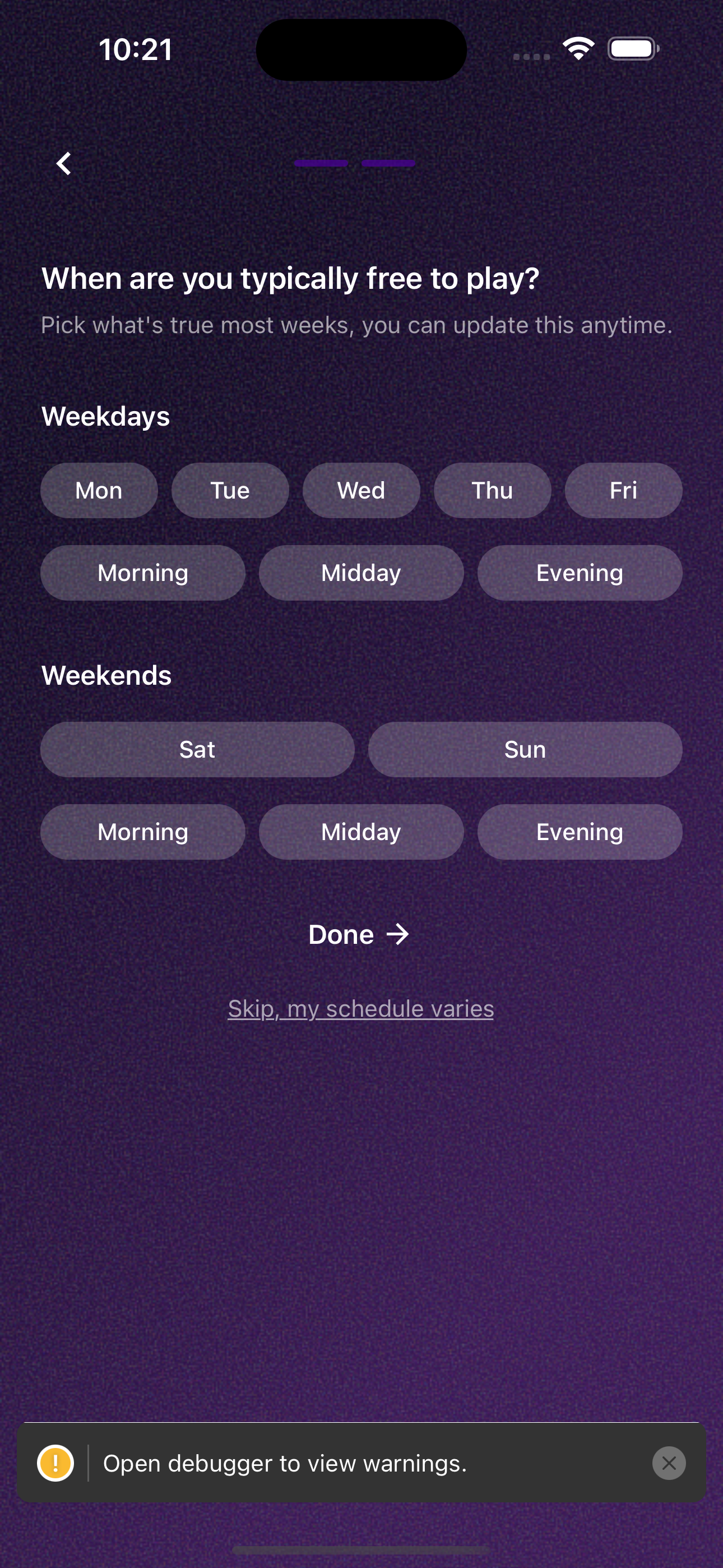
Step 03 · Availability
When are you free to play?
Weekday evenings? Weekend mornings? Players set a schedule once and get surfaced events that actually fit their life — no scrolling through games at 7am when you only play nights.
Context
The demand is there. The supply is there. Nobody built the infrastructure.
D1 volleyball alum. Moved to Chicago. Hit the same wall every adult rec athlete does — a dozen fragmented platforms, zero coordination layer.
The problem
A coordination failure, not a supply problem.
Courts existed. Players existed. They just couldn't find each other efficiently.
The market
$36B global amateur sports market.
Every competitor (CatchCorner, Facilitron, Reclub) built for facility operators — the supply side. Nobody built the demand engine for players.
The bet
If we aggregated every event into one place and made it easy for players to find each other, we'd own the pre-play layer of the sports ecosystem.
Recess Sports
Research
Every method had a job. Here's why.
I didn't run research to check a box. Each method was chosen to answer a specific question the previous one couldn't.
Validate the problem, not the solution
Talked to rec volleyball players across Chicago to understand where they already found games and what friction they hit. Confirmed the coordination layer was missing — not supply.
Map the blindspot competitors left open
CatchCorner, Facilitron, Reclub — all built for facility operators. Nobody owned the demand side. That gap became our wedge.
Watch behavior, not stated preference
Post-launch funnel data showed a significant drop-off in the original onboarding. Usability sessions confirmed it felt like homework. We stripped it back to only what the app needs upfront: phone, skill level, availability.
Iteration 01
DUBL — The Social Network Hypothesis
We started with the wrong unit of value. DUBL was built on the belief that volleyball players needed a social network — find friends, rate personalities, post sub requests to a feed. The interface was solid. The insight wasn't.
These are rough explorations built to test the concept quickly — visual polish was intentionally saved for the next iteration.

Landing
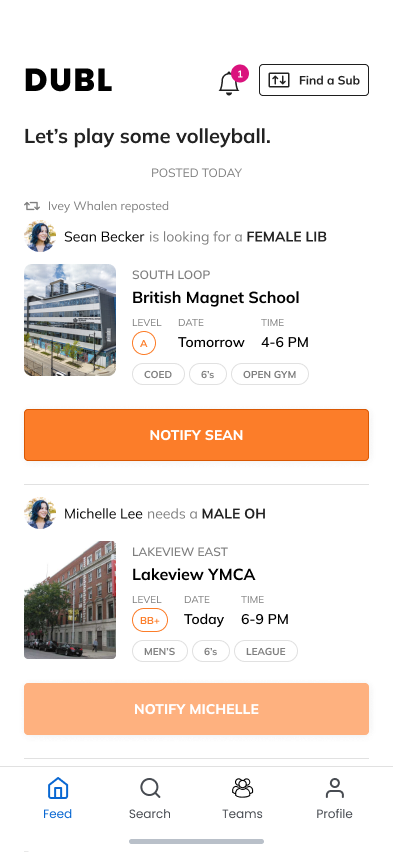
Sub Request Feed
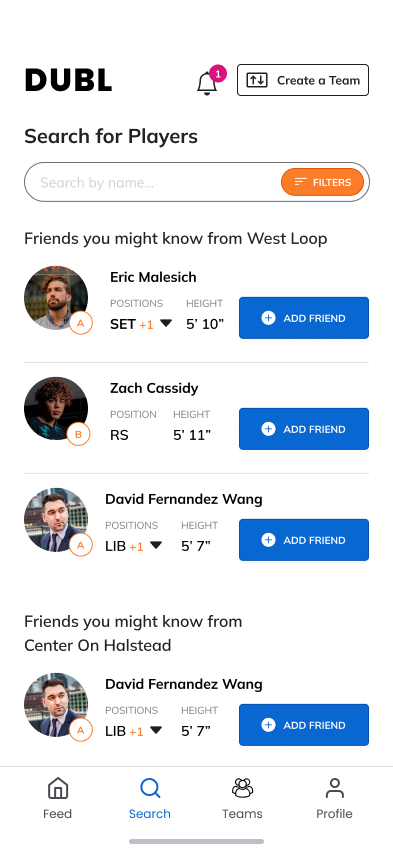
Find Players
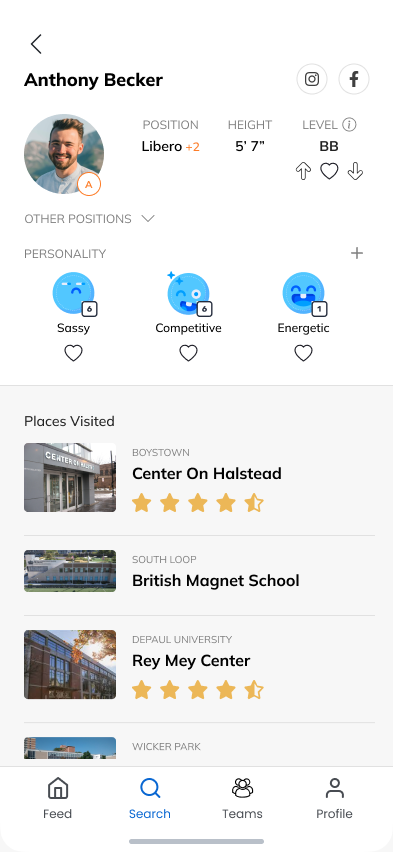
Profile Added
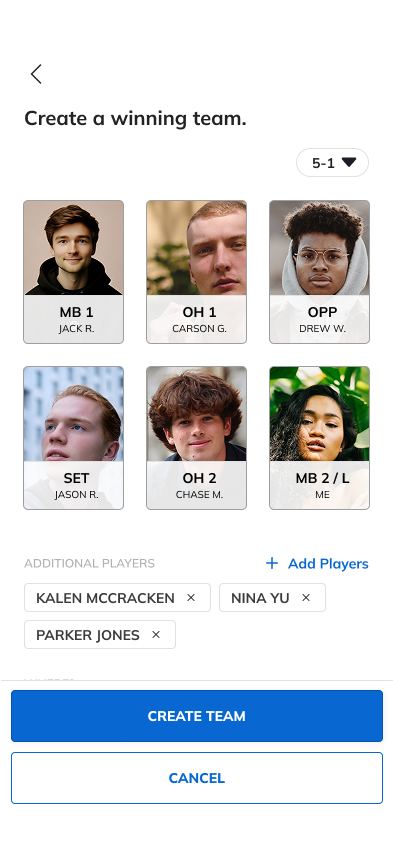
Create Team
The Learning
Players weren't stuck on connections. They were stuck on coordination. Nobody cared about a volleyball LinkedIn — they just wanted to find a game tonight.
Iteration 02
Recess V1 — The Event Management Pivot
We rebranded to Recess and shifted from people-first to event-first. Search Events became the core loop — 94 real Chicago events, filterable by skill level, type, and format. RSVP tracking and team rosters solved the coordination problem we'd found.
These are rough explorations built to test the concept quickly — visual polish was intentionally saved for the next iteration.
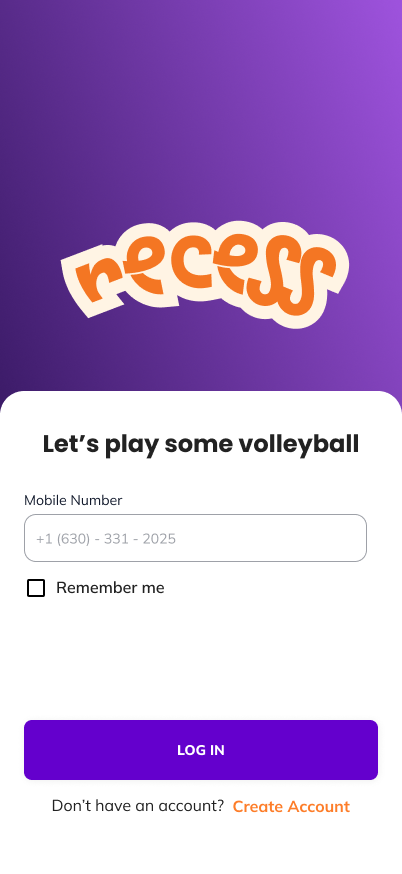
Login
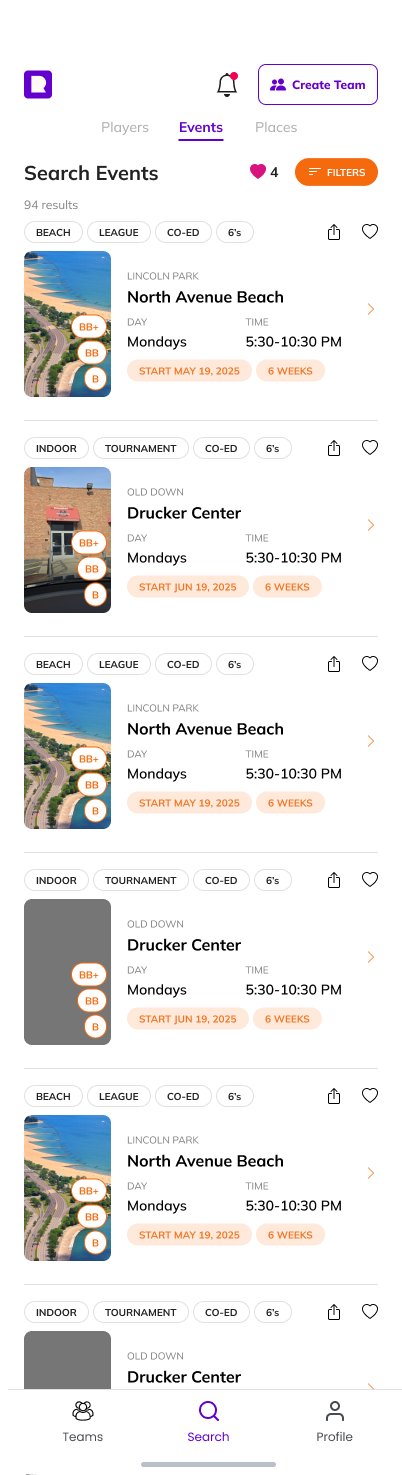
Search Events
.png)
Search Filters
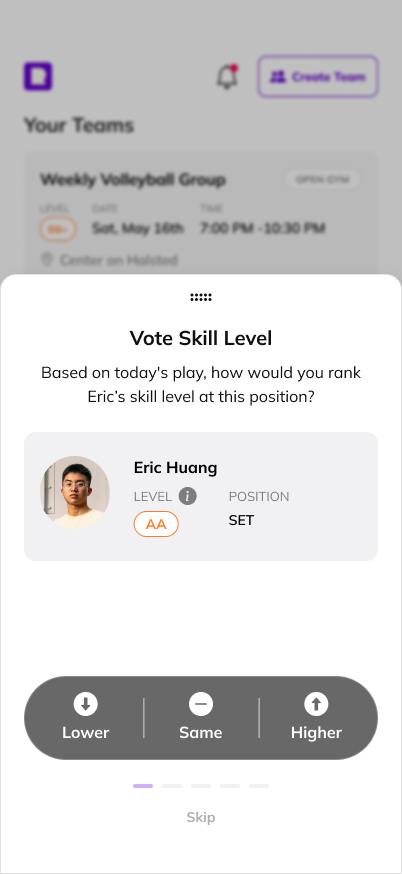
Skill Ranking
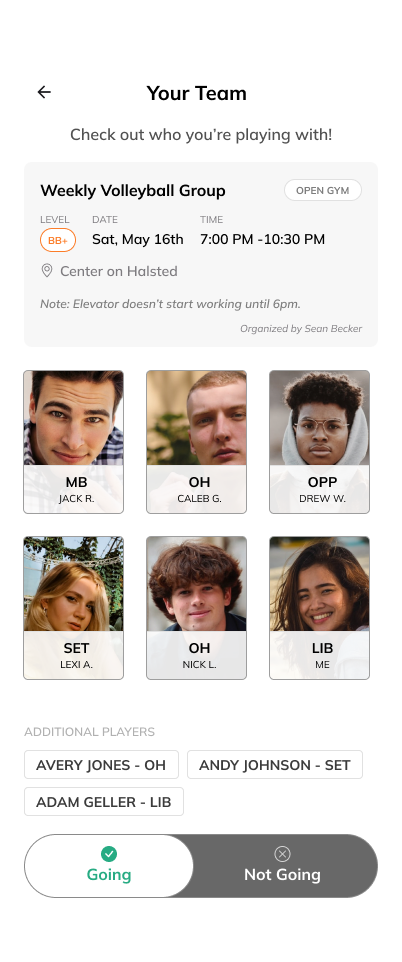
View Team
The Learning
We'd solved demand (players wanting to play) without solving supply (enough quality, organized events). The app worked — there just wasn't enough in the feed to make people come back daily.
Iteration 03
Recess V2 — The Two-Sided Platform
V2 gave organizers the infrastructure to create quality supply. Facility booking by the hour on an interactive map. Recruit Blast to post openings and get matched with verified players. Structured Leagues for recurring weekly engagement.

Entry
Landing
Players
Profile
Upload
View Event
The Learning
The product proved the vision — organizers used it, players filled events. The business model didn't survive: consumer marketplace cold start is fatal without investment and a committed team to push through.
Iteration 04
ClubConnect — The B2B Discovery
The insight wasn’t wrong. The business model was. The club sports world has the same coordination chaos — but a fundamentally different buyer. Club directors would pay to solve this.
Audience
Model
Revenue
Recess — B2C Marketplace
ClubConnect — B2B SaaS
The approach this time
No code until 5 customer interviews confirm real willingness to pay — with a clear go/no-go threshold. Recess was built on instinct. ClubConnect won't be.
The Learning
Elite clubs don't need marketplaces — they need tools. The recreational side taught us that coordination is the real problem, but clubs solve coordination differently than pickup players. They need infrastructure for the operations they're already running, not a platform to discover new ones.
The Hard Part
300 users. 23% D30 retention. Three root causes.
The app launched, got real users, and immediately revealed a leaky bucket. The diagnosis wasn't one problem — it was three compounding ones.
Two sides needed before either saw value
At 300 users, the marketplace was too thin. Open the app, see 2 events that week — no reason to come back tomorrow.
Notifications bug killed the flywheel
For weeks, event join requests fired no notification to hosts. The core coordination loop — request → approve → play — was silently broken.
Led design and product across a 5-person eng team
I led product design, user research, and front-end development while coordinating 3 back-end engineers and 1 front-end engineer. Wearing multiple hats — design, ops, data sourcing, fundraising — sharpened my ability to prioritize ruthlessly and ship under real constraints.
The honest diagnosis: the consumer marketplace model required critical mass before it could deliver value — and critical mass required a level of investment and runway that a bootstrapped, asymmetrically committed team couldn't sustain.
Learnings
What a year of founder school taught me.
Marketplaces aren't bootstrappable
Two-sided marketplaces are the hardest business to bootstrap. You need both sides before either delivers value — and your burn rate doesn't wait for liquidity.
Talk before you build
Built Recess on instinct. ClubConnect won't ship a single line of code until 5 structured interviews validate real willingness to pay.
Unfair advantages compound
D1 background + real relationships with club directors = entry points a funded competitor can't buy. Took one year to see that as a strategic asset.